In the world of high-speed manufacturing and packaging, the final step—palletizing—is often the most critical bottleneck. When production lines run at hundreds of units per minute, the palletizing equipment must match that pace without compromising stack quality or stability. This necessity is precisely why high level palletizers are the gold standard for many global operations.
These machines are essential for businesses that require continuous, non-stop operation and superior pallet stability, often found in the food, beverage, and consumer packaged goods (CPG) sectors.
Defining and Differentiating High Level Palletizers
The fundamental characteristic that defines a high-level palletizer is the elevation of the product as it enters the machine, typically above the main conveyor line or at an ergonomic height for maintenance access.
The Role of High Level Infeed Palletizers
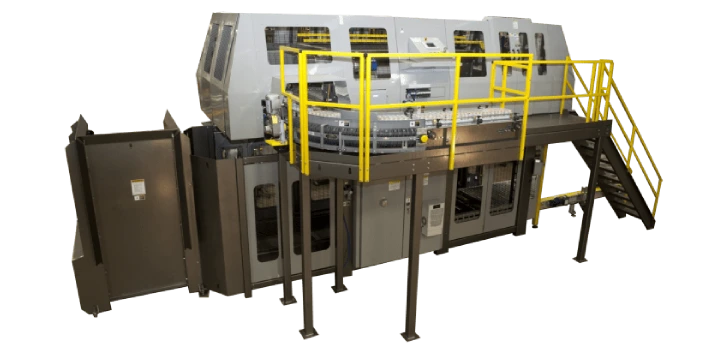
The term high level infeed palletizers specifically refers to systems where product cases, bags, or bundles are conveyed to the machine’s layer forming area at an elevated height (often 7 to 12 feet off the ground). .
This elevated design offers several crucial advantages:
- Gravity Assist: Infeed conveyors can utilize gravity for final product orientation, reducing the need for complex powered mechanisms.
- Floor Space Efficiency: The main working components, especially the layer forming and stacking mechanisms, are located well above the factory floor, allowing for clear passage underneath and easier integration with existing conveyor systems.
- Speed and Stability: High-level machines are mechanically designed for continuous, high-speed operation, using sophisticated squaring devices to ensure each layer is perfect before placement.
1. Continuous Flow High-Level Palletizers (The Inline Workhorse)
The most common variant is the continuous flow or inline high-level palletizer. These machines are designed for a singular purpose: stacking a massive volume of a limited number of product Stock Keeping Units (SKUs).
- Mechanism: Product flows directly into the machine, is elevated, and layers are formed horizontally on a table. When the layer is complete, a pusher or apron smoothly transfers the entire layer onto the pallet below.
Industrial Uses:
- Beverage: Canned or bottled drinks where speed can exceed 100 cases per minute.
- Dairy: High-volume milk or yogurt containers.
- High-Volume CPG: Single-flavor cereal boxes or detergent bottles.
- Key Benefit: Unmatched throughput and reliability for single-product lines. They offer the fastest stacking speeds possible outside of complex robotic systems.
2. Multi-Line High-Level Palletizers (The Centralized Hub)
While continuous flow machines handle one line very fast, multi-line high-level systems are designed to consolidate product from several slower-speed production lines onto shared palletizing equipment.
- Mechanism: These machines feature sophisticated infeed systems that merge multiple conveyor lanes into the single layer forming area. Programming allows the machine to sequence products from different lines, ensuring the right product is stacked at the right time.
Industrial Uses:
- Frozen Foods: Where several different packaged meals are produced simultaneously but need to be palletized centrally.
- Co-Packing Operations: Facilities handling short runs of multiple products for different clients.
- Key Benefit: Maximizing asset utilization by ensuring the expensive palletizer is always running, regardless of fluctuations in individual line speeds.
Choosing the Right System with Columbia Machine India Palletizers
The decision between various high level palletizers depends on product fragility, required throughput, floor plan constraints, and future flexibility needs. For operations facing intense production demands, partnering with an experienced robotic palletizer manufacturer is essential for custom optimization.
Manufacturers like Columbia Machine India Palletizers specialize in designing and implementing heavy-duty, high-level automation solutions tailored to the specific challenges of dense or irregular products common in the Asian market and beyond. Their expertise extends beyond the palletizer itself to the full cell integration, including advanced conveyor buffering and layer formation software, ensuring the investment delivers maximum OEE (Overall Equipment Effectiveness).
Conclusion
High level infeed palletizers represent a critical investment for companies committed to maximizing production efficiency. By moving the layer formation process to an elevated position, these machines provide superior floor accessibility, maintain remarkable stacking speeds, and deliver the rock-solid pallet stability required for safe and efficient shipping. Whether you need the brute speed of a continuous flow system or the versatility of a multi-line setup, high-level palletizing is the definitive choice for keeping pace with modern high-volume manufacturing.

No comments:
Post a Comment