In modern high-volume production, packaging lines rarely handle a single, uniform product. Manufacturers frequently switch between rigid cardboard cases, flexible plastic bags, and shrink-wrapped cartons, all requiring reliable, fast, and stable pallet stacking. This demanding environment is precisely where high level palletizers demonstrate their superior capabilities, offering the speed and structural integrity necessary for shipping success.
Understanding the High Level Advantage
A high-level palletizer is defined by its elevated infeed system. Product enters the machine high above the floor, typically between 7 and 12 feet, which provides critical floor space and simplifies gravity-fed accumulation and sequencing. This design facilitates faster throughput and integrates seamlessly with upper-level conveyor systems common in busy facilities.
Precision for Cases and Cartons
When handling rigid, rectangular items like sealed cases of canned goods or cartons of consumer electronics, stability is achieved through tight squaring and precise placement. High level infeed palletizers excel here because their robust, stationary layer-forming beds allow for exceptionally accurate layer creation.
Key Case Handling Features:
- Layer Squaring: Powerful mechanical side and end squaring devices push the entire layer into perfect alignment before transfer. This ensures that the finished pallet stack is straight, preventing leaning during transport.
- Smooth Transfer: Once squared, the entire layer is often pushed onto the pallet via a smooth layer apron or stripper plate, minimizing friction and maintaining layer integrity—crucial for cases that may contain fragile products.
Mastering the Challenge of Bag Palletizing
Bags—containing cement, flour, chemicals, or animal feed—pose the greatest challenge to any palletizing system. They are flexible, their contents shift, and they require interlocking patterns to prevent collapse.
Specialized High-Level Bag Handling
For bags, the high-level system uses specialized bag flattening and conditioning equipment before the infeed. Once flattened, the high level palletizers use their elevated layer-forming area for precise placement. The machine must be programmed to create complex brick-or-pinwheel-style interlocking patterns, ensuring that the finished pallet is stable enough to withstand road vibration. This dedication to pattern accuracy is a key differentiator of high-level machinery over simpler robotic systems.
Benefits for Bags:
- Superior Overlap: The machine's programming ensures optimal bag overlap for structural support, making the pallet stack itself a cohesive unit.
- Reduced Damage: Unlike manual labor where bags can be dropped or roughly handled, the automated, consistent movement minimizes tearing and spillage, keeping the product clean and compliant.
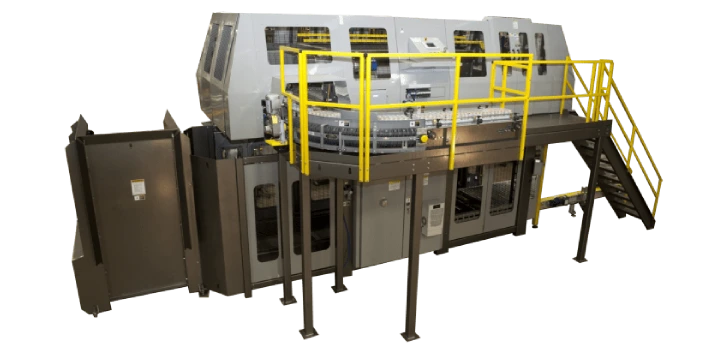
Partnering with Expertise: Columbia Machine India Palletizers
Successfully implementing high-level automation for diverse products requires deep engineering experience. A generic solution will often fail when asked to handle both heavy, shifting bags and light, delicate cartons on the same line.
Manufacturers like Columbia Machine India Palletizers are relied upon because they offer proven expertise in tailoring these versatile machines. Their approach involves customized infeed and discharge systems, specialized layer formation software that can switch between case and bag patterns instantly, and rugged construction designed to manage the high forces involved in squaring heavy loads. Choosing an established robotic palletizer manufacturer ensures that the system is optimized for maximum OEE (Overall Equipment Effectiveness), regardless of the product mix on the line.
Conclusion
Whether your product comes in a rigid carton, a shrink-wrapped case, or a heavy, non-uniform bag, high level infeed palletizers provide the necessary foundation for fast, accurate, and stable stacking. By centralizing the complex layer formation process at an elevated height, these systems deliver continuous, reliable throughput while keeping factory floors clear. For operations demanding high speed and maximum versatility across product types, the high-level system remains the preferred, long-term automation investment.

No comments:
Post a Comment